
Housing influences all aspects of an area’s economic vitality. As Johnson County’s growth continues, understanding county-wide housing trends helps leaders, developers, employers and residents make informed decisions about future investments and opportunities.
Across Johnson County, cities and communities continue to pursue housing solutions that expand options and support growth. Recent housing progress such as Iowa City’s ACT Campus redevelopment, Coralville’s Gather Iowa development, North Liberty’s Urban Central District, or Johnson County’s Non-Metro Housing Assessment Study demonstrate the ongoing efforts to increase housing supply, redevelop strategic sites, and create housing opportunities for residents across a range of income levels.
While individual projects help the county meet immediate housing needs, longitudinal housing data provides a broader view of market conditions and long-term trends. Greater Iowa City, Inc.’s housing dashboard tracks four key indicators: homeownership rate, cost-burdened households, housing wage, and building permits per capita. Together, these measures provide insight into housing affordability, accessibility, and the region’s ability to accommodate future growth.
Measuring Housing Affordability and Access
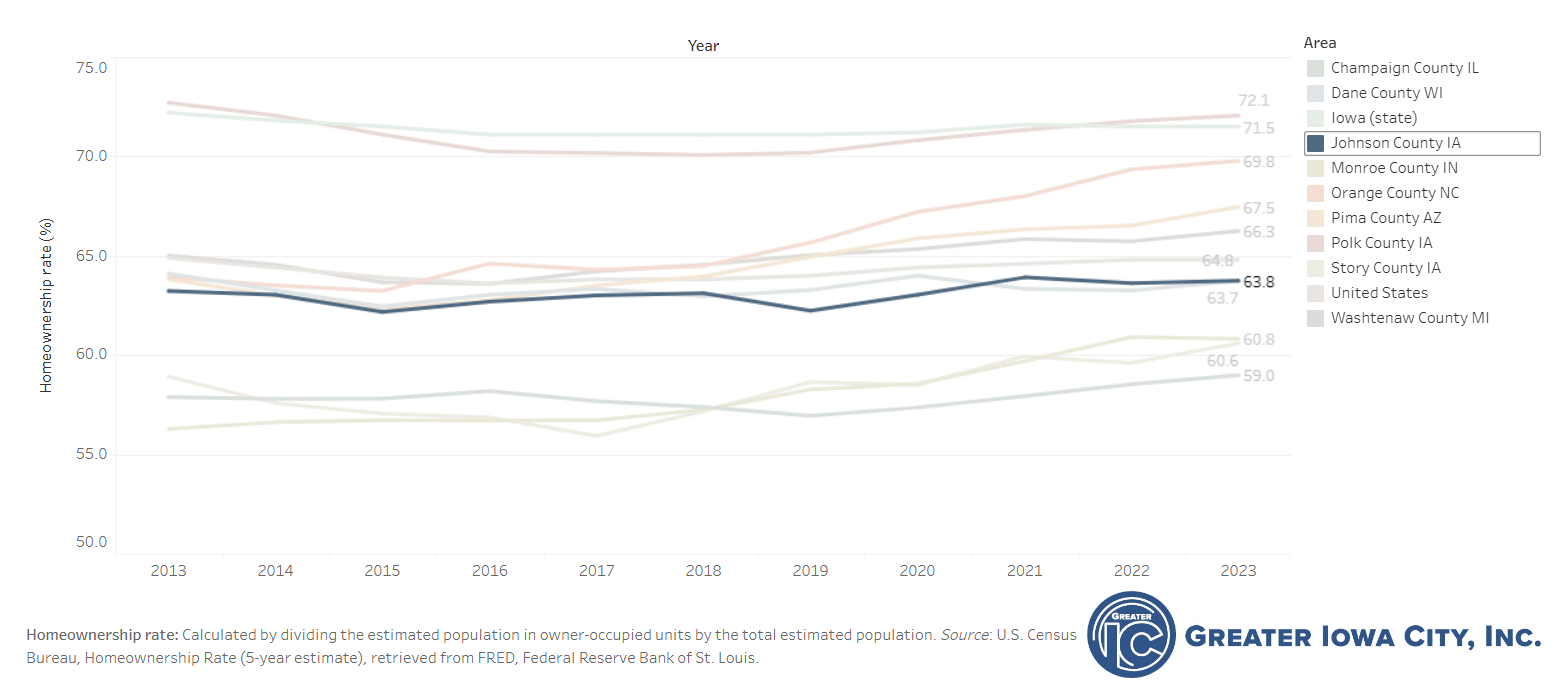
Homeownership remains one of the most common pathways to long-term financial stability. In 2023, Johnson County’s homeownership rate was 63.8%, compared to 71.5% statewide and 64.8% nationally. Johnson County’s high share of students within the total population creates a housing type mix that differs from the average mix in counties of similar size. Johnson County has remained near the 63% homeownership rate for the past ten years with little change.
Another important measure of affordability is the share of cost-burdened households, defined as households spending more than 30% of their income on housing costs. In 2023, 33.5% of Johnson County households were considered cost burdened, ranking near the bottom when compared to all similar counties showed on the dashboard. When comparing this data point among all nine counties, Johnson County’s relative standing has dropped significantly over the past decade. See the graph below for a time trend of cost-burdened households.
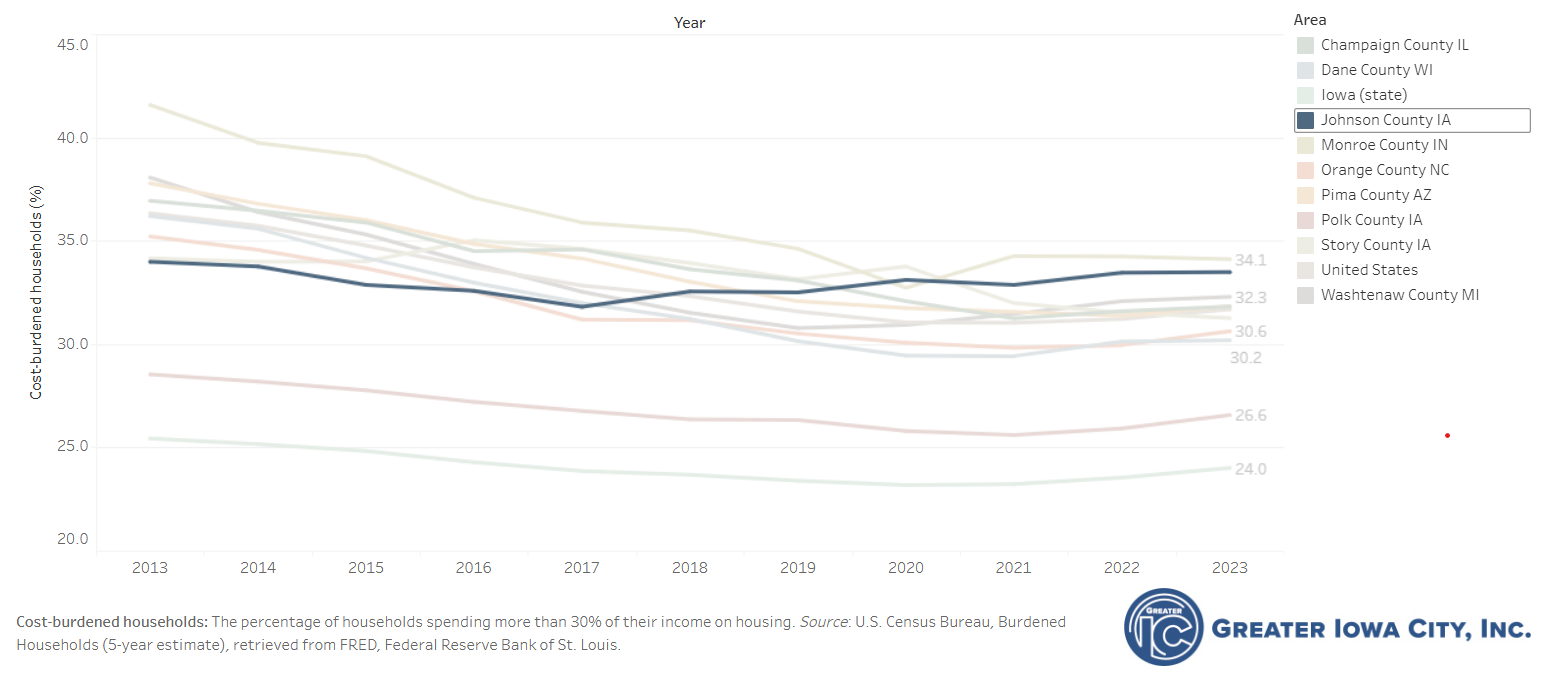
When Johnson County households must devote a larger share of their income to housing, they are left with fewer resources available for other necessities like transportation, healthcare, childcare, or education. Tracking housing cost burden trends helps communities identify affordability challenges and evaluate opportunities for future housing investments.
Wages and Housing Costs
The housing wage metric provides another lens through which to evaluate affordability. Housing wage represents the hourly income a worker must earn to afford a typical rental home without becoming cost burdened. In the Greater IC dashboard, the housing wage is for two-bedroom units at market rate.
In 2025, the housing wage in Johnson County was $21.25, placing the county in the top third when compared to comparison counties.
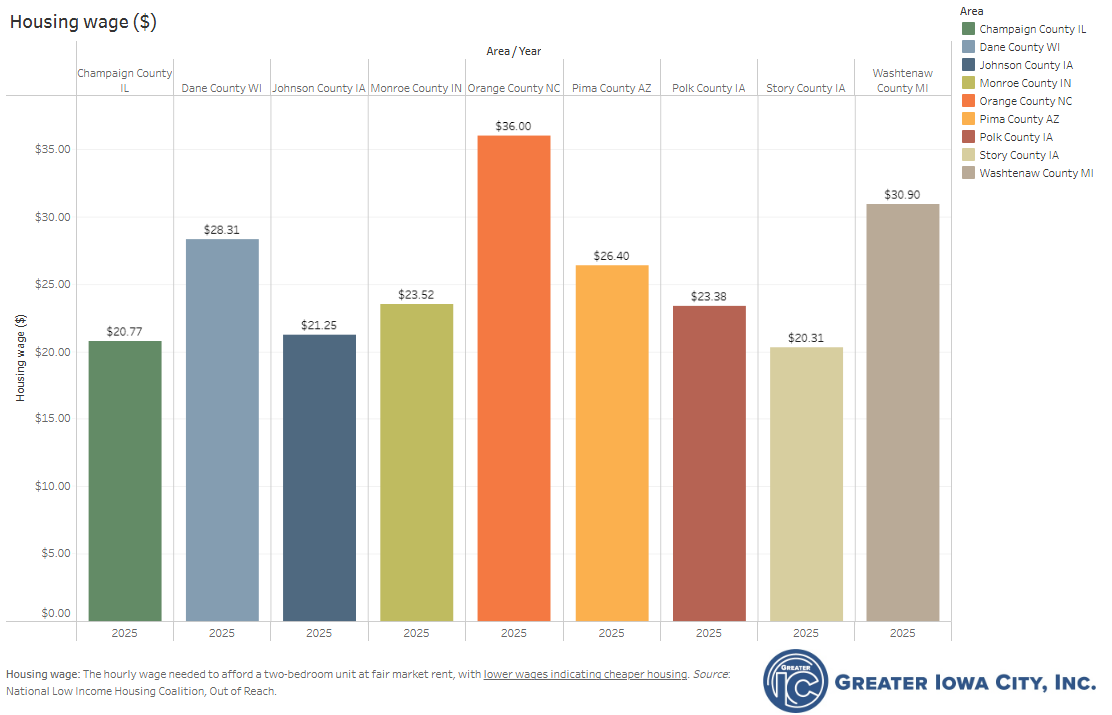
Comparing housing wages to local earnings helps illustrate the relationship between housing costs and workforce incomes. As the county works to attract and retain talent, understanding that relationship can inform discussions around housing supply, workforce development, and economic competitiveness.
Building for Future Growth
Affordability depends not only on housing costs, but also on housing supply. To better understand housing production, Greater IC tracks building permits per capita annually, a metric that measures the number of housing units authorized relative to population size.
Most recently, Johnson County issued one building permit for every 125 county residents. The only county who issued more building permits per capita in the dashboard is Dane County, WI, home to the University of Wisconsin-Madison.
Building permits offer insight into how communities respond to population growth and housing demand. While permit activity can vary from year to year, long-term trends help local leaders evaluate whether new housing development is keeping pace with community needs.
The local projects highlighted earlier in this article represent just a few examples of how communities throughout Johnson County are working to address housing demand. Combined with ongoing private-sector investment and local planning efforts, these developments contribute to a broader strategy of expanding housing choices and supporting sustainable growth.
Data Informs Housing Decisions
The housing indicators tracked in Greater IC’s Community Data Dashboard help provide a clearer picture of the trends shaping Johnson County’s housing market. By monitoring affordability, access, and housing production over time, community leaders can make informed decisions that support economic growth and expand housing opportunities for residents.
As the county and its incorporated cities continues to evolve, housing data will remain an essential tool for understanding market conditions, identifying opportunities, and supporting a strong and resilient regional economy.
Explore our Community Data Dashboard >>>
Read our 2025 Data Digest Report >>>
Want to learn more about Greater IC’s data services? Reach out to Evan Doyle, Economic Development Program Director, at evan@greateriowacity.com for additional information or data requests.