
Across Iowa, communities are working to meet growing demands for housing, jobs, and infrastructure. Tax Increment Financing (TIF) plays a key role in these efforts by helping close funding gaps and unlock private investment. As state lawmakers consider potential changes to TIF, it is critical to understand how this tool supports local economic growth and helps build our tax base to fund critical community services.
What is TIF?
Tax Increment Financing is a financing mechanism that allows cities and counties to reinvest a portion of new property tax revenue generated by development back into that same area.
Here’s how it works:
- A city designates a TIF district in an area targeted for development or redevelopment.
- As new investment occurs, property values increase.
- The increment, or growth in property tax revenue above the original base value, is set aside for a defined period of time.
- Those funds are then used to support project costs, such as infrastructure, site preparation, or gap financing.
Importantly, TIF does not raise property tax rates. It captures new value created by development and reinvests it locally to make projects viable.
Why TIF Matters
TIF is often the difference between a project moving forward or not happening at all. It helps communities:
- Close financing gaps – Many projects face higher costs than the private market alone can support, especially those involving redevelopment, environmental cleanup, or public infrastructure. TIF helps bridge that gap.
- Support strategic growth – Communities can guide development to priority areas, including downtowns, industrial parks, and underutilized corridors.
- Expand the tax base over time – Once TIF obligations are complete, the full increased property value returns to the general tax rolls, benefiting schools, local governments, and essential services.
- Deliver community benefits – TIF often supports infrastructure improvements, workforce housing, and commercial developments that create jobs and expand amenities.
TIF in Action in Johnson County
Johnson County communities have used TIF thoughtfully to support projects that deliver long-term value. Examples include:
- Downtown Iowa City redevelopment projects that have strengthened the urban core, preserved historic buildings, supported small businesses, and enhanced walkability.
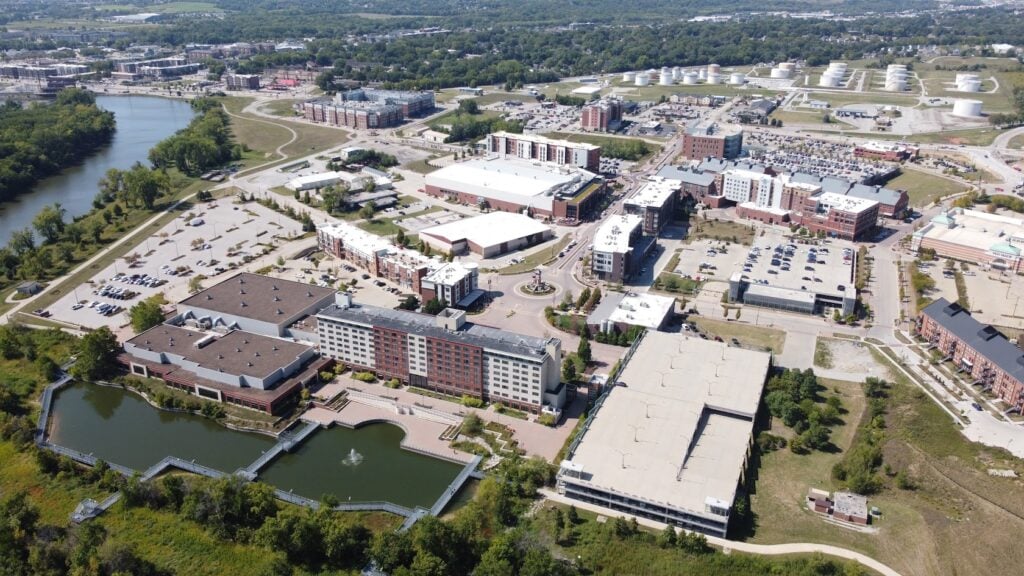
- Iowa River Landing in Coralville, a formerly contaminated industrial brownfield that is now a mixed-use district and regional destination for commerce, healthcare, hospitality, and entertainment.
- Public improvements to support Main Street businesses in Solon and other smaller communities.
- Industrial and business park expansions across the region, where TIF has supported infrastructure needed to attract and retain employers, creating jobs and diversifying the local economy.
These projects are now generating sustained economic activity and contributing significantly to the region’s tax base.
Why This Conversation Matters Now
The Iowa Legislature is currently considering changes to TIF policy. While thoughtful updates are part of good governance, it is critical that any changes preserve the flexibility communities need to respond to local conditions.
TIF is not a one-size-fits-all tool. What works in a rural community may differ from what is needed in a growing metro. Local control ensures that communities can tailor TIF use to their specific economic development goals.
As conversations continue at the State Capitol, understanding how TIF works, and the value it delivers, will be key to ensuring that our communities can continue to leverage public and private investment, grow strategically, and build a more resilient economy.