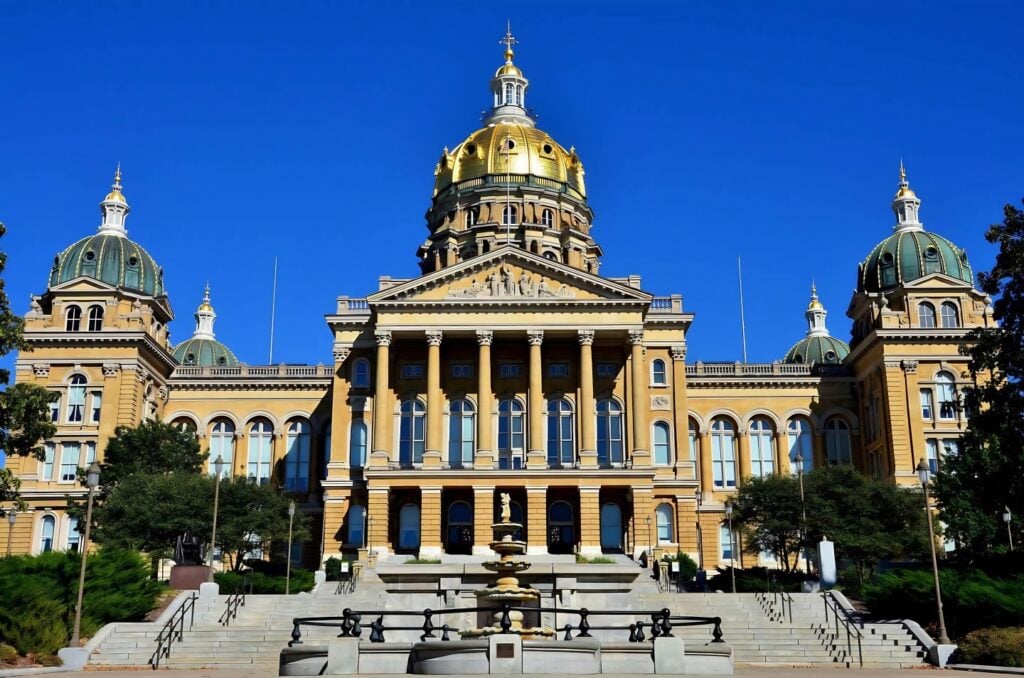
This past weekend, legislators in Des Moines passed their final proposals and officially concluded the 2026 legislative session. Governor Reynolds will now have 30 days to sign or veto the bills that have come to her desk.
Property Taxes
One of the largest issues legislators found a compromise on in the final hours of the session was property taxes.
The final property tax agreement between the House and Senate (SF 2472) would:
- Place a 2% cap on revenue growth on city and county general levies, beginning in FY 2027-2028. The cap includes some exceptions, including school funding, debt servicing, county supplemental, city special revenue levies, and community college variable levies.
- Eliminate the homestead tax credit and replace it with a homestead exemption of up to $5,500, or 10% of a home’s value up to $20,000 dollars.
- Reinstate multi-residential homes as their own property class and include a phased-in change where multi-residential property will be set 6% higher than the residential rollback.
- Limit future Tax Increment Financing (TIF) districts to 23 years, ending perpetual TIFs. The bill would also remove the current $5.40 levy from all future TIF districts and from existing districts after 20 years.
- Remove LMI (low and moderate income) residential development requirements from TIF districts.
- Lower the state $5.40 uniform levy set for school foundation property taxes using state aid.
- Place a larger share of revenue from SAVE, the school infrastructure sales tax, toward property tax relief.
Overall, the Department of Management has estimated that this policy would save taxpayers approximately $4.2 billion over six years.
Iowa Economic Development Authority Bill
Greater IC has also been closely monitoring the Iowa Economic Development Authority Omnibus Bill (HF 2799), which passed the House and Senate this weekend. This bill would:
- Create a new Headquarters Expansion and Development for Growth (EDGE) program, which offers performance-based tax credits for businesses that create and retain high wage jobs to attract and keep corporate headquarters.
- Modify the 260E program by requiring employers to pay training costs upfront, shortening deferral periods for new agreements, capping bonds for community colleges, and adding reporting requirements.
- Extend the Major Economic Growth Attraction Fund to 2030.
- Establish a Business Incentives for Growth training fund to support high-impact job training.
- Repeal the New Jobs Tax Credit.
Finally, legislators proposed a final state budget of $9.6 billion, representing a 1.3% spending increase from last year.
Many legislators stated they felt confident in the work that has been done this session in fulfilling the goals that they set in January. However, eminent domain, which was identified as a priority, remains a contested issue that legislators could not agree on this session.
For a more comprehensive list of other notable bills that have passed and failed this session, please refer to the following resources:
- “The 2026 legislative session is over. Here’s what passed, failed, and what is already Iowa law” – Iowa Capital Dispatch
- “Iowa Legislature ends 2026 session with a last-minute deal on property taxes” -Iowa Public Radio
Greater IC staff will investigate the impacts of new legislation on our business community and continue to work with partners to advance a resilient economy throughout Johnson County.